
The Language Secret Books
In 1993, John Stedman, a monolingual Englishman, volunteered for humanitarian work. Much to his surprise, he and his wife, Sharon, were assigned to Côte d’Ivoire, in West Africa, a country they had never heard of on a continent about which they knew almost nothing. What they learned there – and later in the Democratic Republic of Congo (Congo-Kinshasa) and the Republic of Congo (Congo-Brazzaville) – changed their lives forever, and sparked a lifelong love of the people, languages and culture of the continent.
Like most English schoolchildren, John never learned the grammar of his own language. In fact, he was not absolutely sure what grammar was. Even though he attended a grammar school. The concept of multilingualism was totally alien to him, but over the twenty-five years spent as a linguist and lexicographer in various African countries and among the African diaspora in Europe, he became fascinated with the relationships between language, culture, history and ethnicity.
His books explore some of the languages spoken in Congo, the interface between the colonial and vernacular languages, the dangerous concept of linguistic superiority and the connections between the languages we speak and our view of the world.
Now living in Germany, John and his wife, Sharon, specialise in teaching accelerated language-learning techniques.
-

The Language Secret
-

Congo: A Story in 26 Words
-

Learn Lingala
-
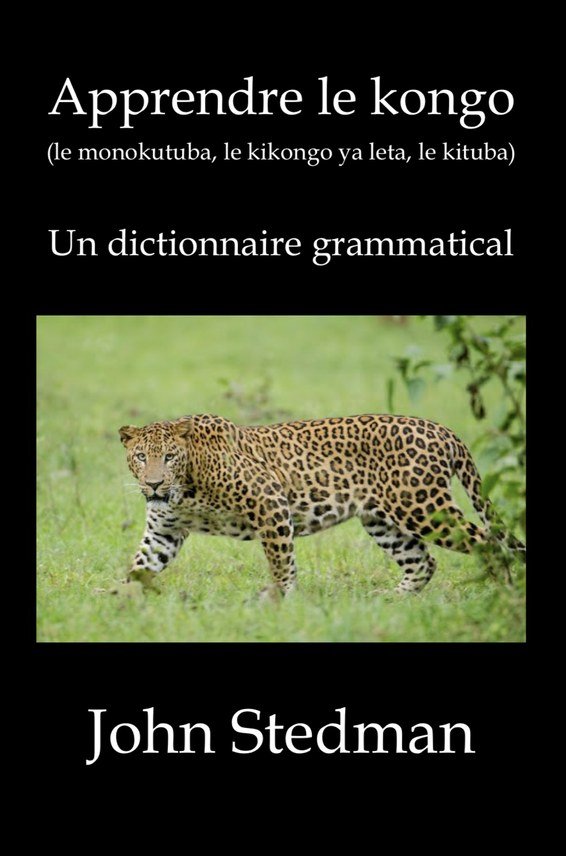
Learn Kongo (Monokutuba)
Kongo. One of the major linguæ francæ spoken in Central Africa. Monokutuba, Kikongo ya Leta and Kituba are three variants of one and the same language that some specialists call Kongo. This grammatical dictionary contains detailed explanations which show both the similarities and the differences between the three dialects. This book – both a dictionary and a grammar, and the very first of its kind – is the result of more than twenty years spent in the two Congos as well as with the Congolese diaspora in Europe.
The Kongo speech area extends from Pointe Noire on the Atlantic coast of the Republic of Congo to the eastern part of the former province of Bandundu in the DRC, a distance of more than a thousand kilometres. It is therefore not surprising that differences have been created between the variants of the language spoken at the two extremes of this vast area, especially since a linguistic “island” – that of Kinshasa Lingala – is located in the middle.